

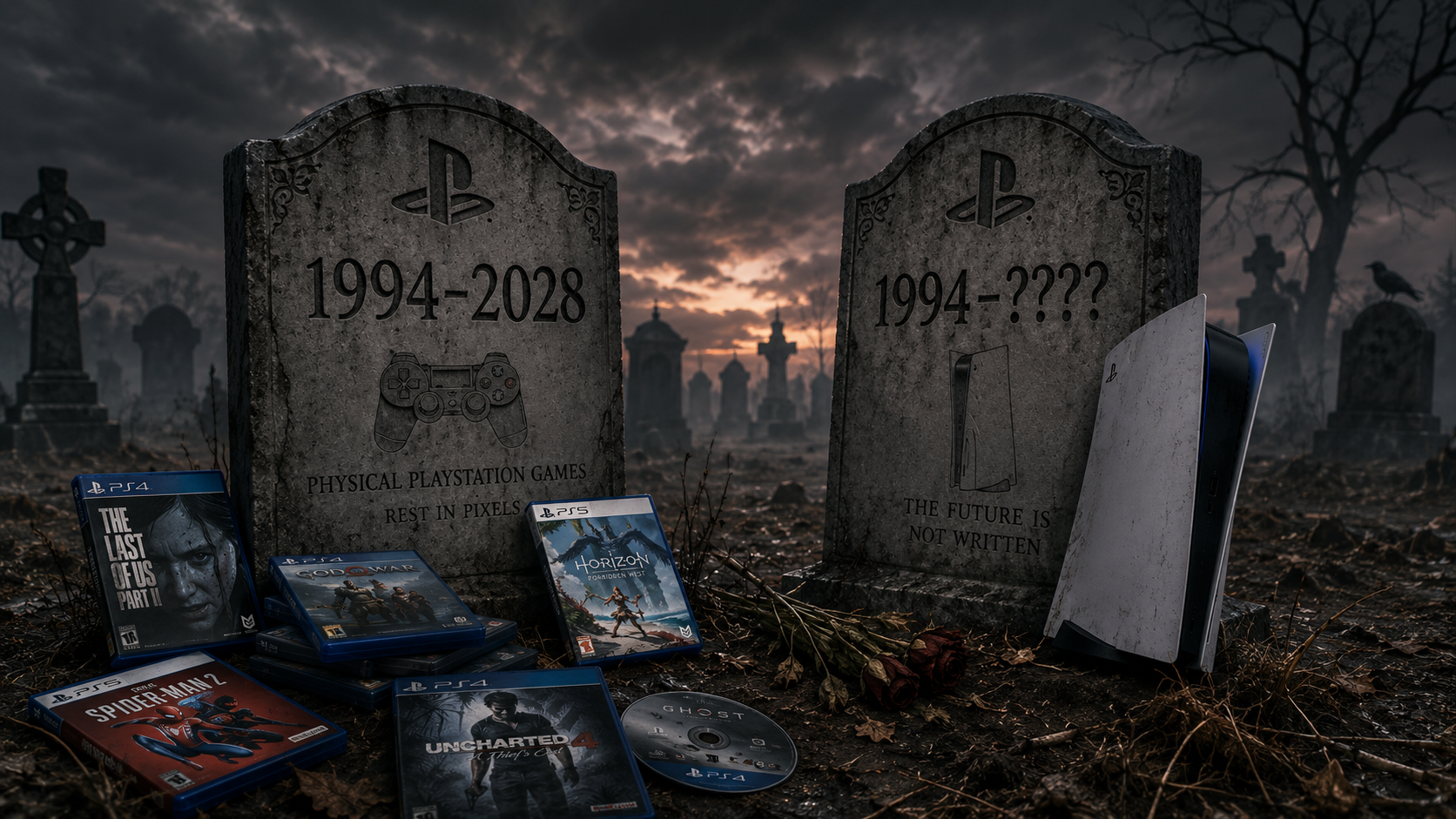
Sony has officially announced that physical game disc production for new PlayStation releases will end in January 2028. After that point, new PlayStation games will be available through the PlayStation Store and at retailers in digital formats only. Sony says this is about following consumer behaviour, arguing that the wider entertainment industry and player preferences have shifted away from discs and towards digital access. Importantly, this does not affect games already released on disc or games still planned to be released physically before January 2028.
So, that is the neat corporate version. The less neat version is this: Sony has just told millions of players that the future of PlayStation is a soulless dictatorship driven by greed where the consumer owns nothing, pays more, and everything has an expiry date.
The public response has been about as warm as you might expect. Yes, there are plenty of players who already buy mostly digitally. I’m one of them, less so on the PS5. I tend to buy my console games physically, but on the whole, I won’t pretend that most of my video game purchasing is done online these days. Digital is convenient. It is instant. It means I don’t have to look in every single game case I own for the game I want to play (yes, I’m one of those). But the backlash is not just collectors crying because their shelves are losing symmetry. It is about ownership, preservation, lending, trade-ins, refunds, pricing competition and what happens when your entire library lives inside one company’s locked garden. Stop Killing Games founder Ross Scott summed up the bigger issue well: players need assurances their games will not be taken after purchase and Sony picked a spectacularly bad week to have this conversation. On the same day, it confirmed plans to close the PS3 and PS Vita stores globally by July 2027, with new purchases no longer possible after closure. However, previous purchases are promised for download “for the foreseeable future”. That phrase is doing a lot of heavy lifting. “For the foreseeable future” is not ownership. It is just a warning. One that reads: what you paid for, you can still use… for now.
Then there is the digital sales argument. Sony’s financials show that in Q4 FY2025, 85% of PS4 and PS5 full-game software units were digital, with the full-year figure sitting at 78%. On paper, that sounds like the case is closed. Players have voted with their wallets. The disc is dead. Move on, grandad.
Turns out, though, Grandad has a point. Those figures are being used in a slippery way. They tell us how many full-game units were sold digitally across PS4 and PS5. It does not tell us how a major £70 boxed release performs when players are actually given a real choice between disc and digital. It also does not account for second-hand sales, borrowing, lending, trading in, or the people who buy physical precisely because it gives them options after purchase. Digital-only indie games, deep-sale catalogue titles and games without physical versions naturally push the ratio towards digital. That does not automatically mean the remaining physical audience is irrelevant. It means Sony has slowly but surely manufactured a landscape that makes removing player choice look like the only choice.
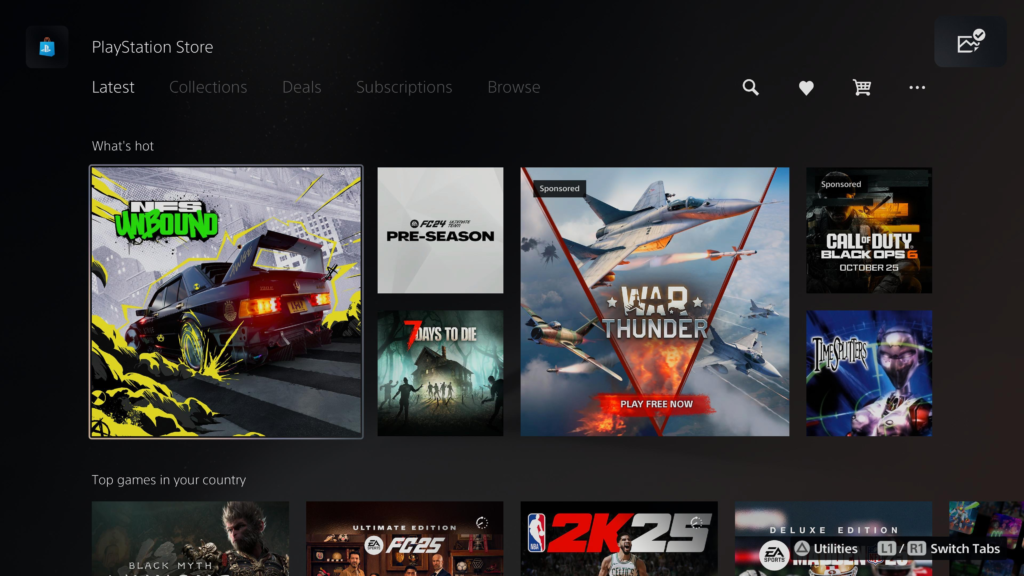
The future this points towards is not just “no more boxes”. It is a gaming landscape where retail becomes a code dispenser, the second-hand market shrinks, prices become easier to control, and preservation becomes someone else’s problem. Once everything goes through one storefront, the platform holder has enormous power over pricing, access and availability. If a game disappears, gets delisted, needs server authentication, or becomes trapped on old hardware, what is the player supposed to do? Frame a receipt?
This also raises a much bigger question: what is the point of owning a console in a digital-only future? Consoles used to sell themselves on simplicity, affordability, exclusives and physical ownership. Even the PlayStation 5 seemed to understand this. The DualSense controller that has a light bar that reflects the game you are playing or has different colours for different game states, and a little speaker in it that plays in-game sounds. These are features that speak to the physical presence of what it means to own a console. Quirks that make it feel less like a piece of ‘tech’ and more like a toy, a tool for player enjoyment. But now hardware prices are rising, with Sony increasing PS5 prices globally in April 2026, including the UK PS5 rising to £569.99 and the PS5 Pro to £789.99. At the same time, big exclusives feel fewer and further between, and Sony has already spent years training players to expect at least some PlayStation titles on PC through Steam and Epic.
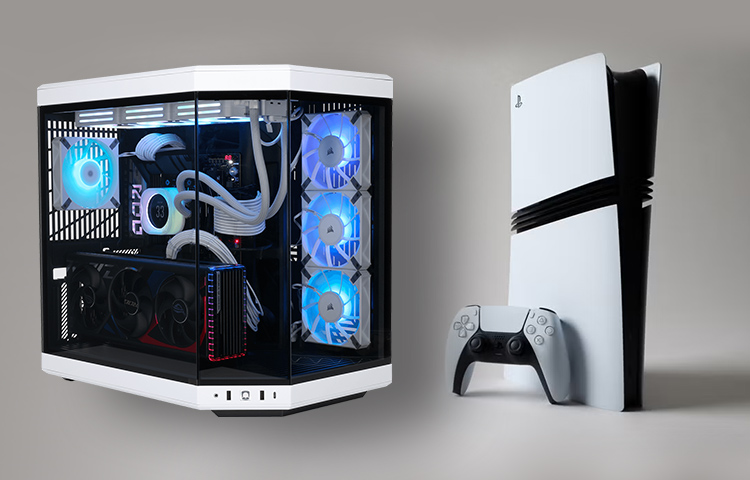
So if the games are no longer a physical, tangible thing to display and collect, the console is expensive, the exclusives are less frequent, and the store is locked to one ecosystem, why wouldn’t more players just go PC? PC is not perfect. Steam is still digital. DRM still exists. Builds are expensive. But PC gives you more storefronts, more flexibility, better backwards compatibility, modding, fairer refund policies, in some cases DRM-free options, and most importantly, cheaper games. Sony might think it is securing the future of PlayStation. It may have just made PC look like the safest long-term platform in the room.
Could Sony U-turn? It has happened before. In 2021, Sony walked back its decision to close the PS3 and Vita stores, with Jim Ryan admitting the company had made “the wrong decision”. So yes, if the backlash keeps building, a compromise is possible. Maybe limited physical runs. Maybe first-party collector discs. Maybe an optional disc programme. Maybe stronger guarantees around digital ownership. But this feels harder to reverse than a store closure, because by 2028 Sony may already be planning manufacturing, retail and future hardware around a disc-free ecosystem.
Ultimately, this is not just about plastic discs. It is about trust. If Sony wants an all-digital future, it needs to prove that digital ownership actually means something. Because right now, it feels like players are being asked to pay more money for less control, less choice and less permanence.
And at that point, the real question is not whether physical games are dead. It is whether the traditional console model is going to die with them.
 VGT-Skyf