

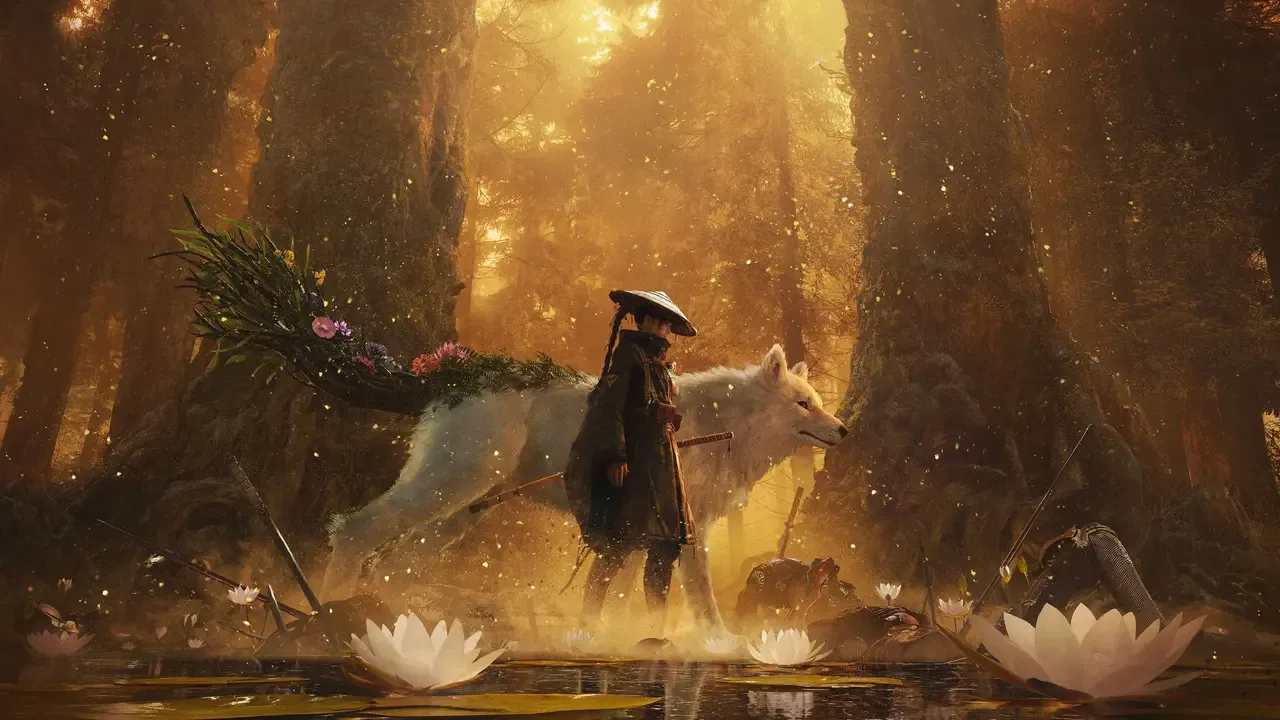
For almost 30 years, Game Freak has been synonymous with Pokémon. While the studio has occasionally stepped outside its comfort zone with games like Drill Dozer, HarmoKnight and Little Town Hero, they’ve always felt like side projects compared to the company’s biggest franchise.
Beast of Reincarnation looks different.
This isn’t just another experimental release squeezed in between Pokémon games. It’s Game Freak’s most ambitious original IP to date – a cinematic action RPG with demanding combat, a haunting post-apocalyptic setting and production values that rival many of the biggest action games on the market. It’s also the first time the studio has truly felt like it’s trying to redefine how people see Game Freak.
A world built around companionship
At the heart of the project is director Kota Furushima, whose journey into leading one of the studio’s largest productions began surprisingly simply. Just three years after joining Game Freak, he entered an internal pitch competition through the company’s Gear Project initiative. His idea won.
That original concept centred around one simple relationship: Companionship.
This certainly isn’t a grand, earth-shattering revolution in the gaming world. Companionship is explored with varying degrees of success in many video games. Nonetheless, it’s a risky path to follow. Companionship is a fundamental human need. We’re wired to form meaningful connections with others. It gives us a sense of belonging, and so when this is done well in a video game, we find it easy to emotionally connect with the relationship. This has resulted in some of gaming’s most poignant moments. On the flip side, that same sentiment means when done poorly, we humans can instinctively sniff it out. It makes a game jarring and hard to play. Even uncomfortable to be around. It’s a sure-fire way to ensure your game falls flat with its players. So, it’s a high-risk, high-reward scenario for Furushima and his team. What stands out to me about Beast of Reincarnation, though, is that despite the heavily combat-focused trailers, despite its flashy graphics or semi-open-world environments, remarkably, despite years of development and the game growing into a large-scale production, Game Freak insist that the core idea of companionship has never changed and is still the central theme in Beast of Reincarnation.
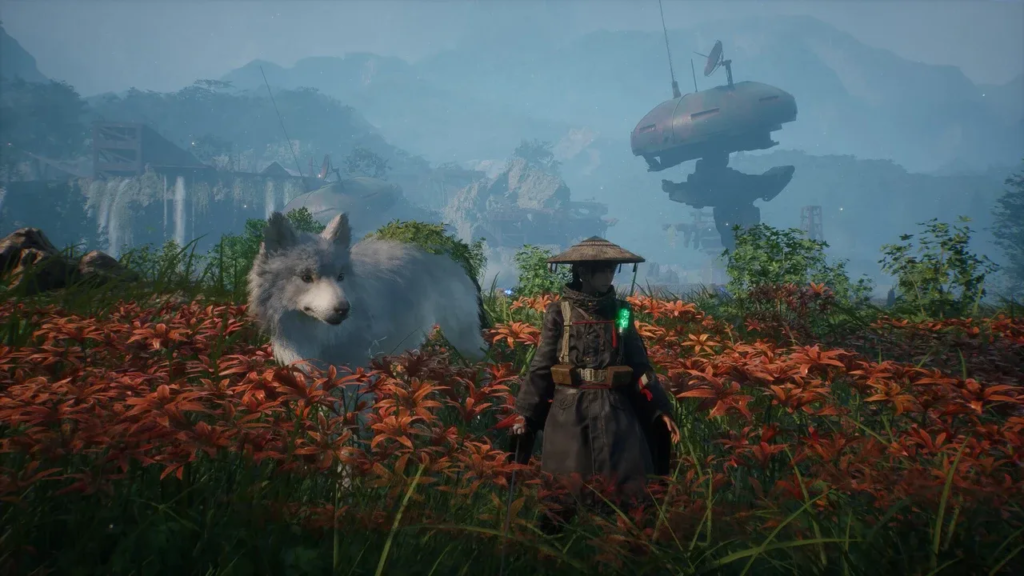
Rather than filling the world with party members and endless dialogue, Beast of Reincarnation focuses on Emma and her enormous canine companion, Koo.
Interestingly, Koo wasn’t always going to be a dog.
According to Furushima, the companion went through multiple testing phases including another human, different animals and even an android. The decision to make the partner a largely silent canine stemmed from a desire to help players build a stronger emotional connection while naturally fitting the command-based combat system.
That combat appears to blend fast-paced swordplay with tactical commands for Koo, drawing comparisons to games like Final Fantasy VII Remake, where players can briefly slow combat to issue commands before diving back into real-time action. Recent gameplay has also shown parries, combo chains and abilities that rely heavily on the bond between Emma and Koo.
More than another post-apocalypse
Whilst companionship remains the key theme of the game, not everything has remained the same since the game’s conception. The post-apocalyptic setting wasn’t actually part of the original pitch.
As development progressed, Furushima realised the emotional story he wanted to tell required a harsher world. A place where survival would naturally strengthen the relationship between Emma and Koo.
That decision also pushed Game Freak towards a far more realistic visual style than fans are used to.
Rather than chasing realism for its own sake, higher fidelity graphics were necessary to sell the emotion of the journey. Furushima even cites Blade Runner as an influence, not for its science-fiction setting, but for the quiet, analogue moments that make its world feel believable.
It’s an interesting philosophy, especially coming from a studio often criticised for the technical limitations of recent Pokémon games.
Nature isn’t just scenery
While giant monsters and ruined cities dominate the trailers, Beast of Reincarnation appears to have a much deeper connection to nature than first meets the eye.
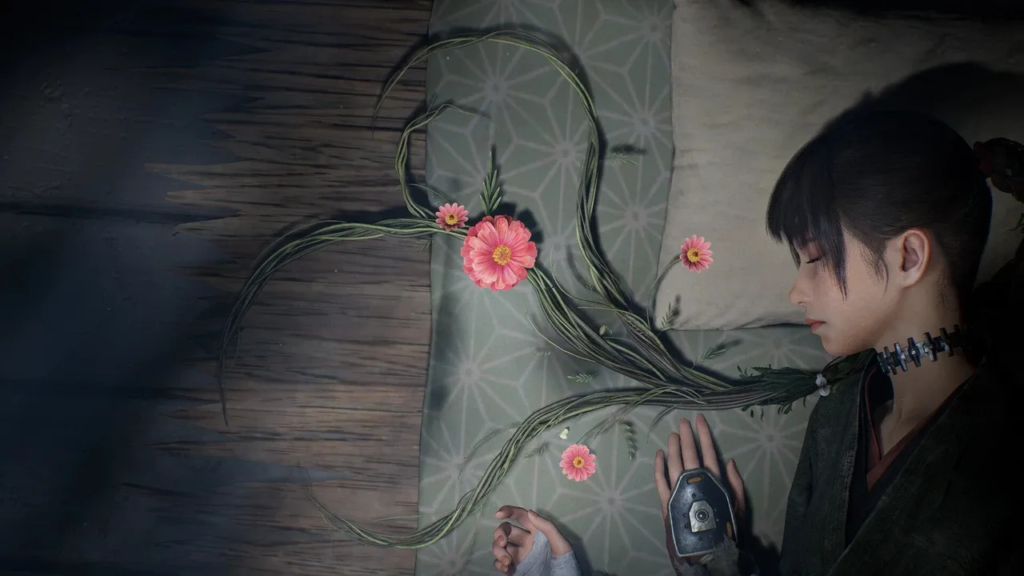
Beast of Reincarnation leans into Shinto beliefs as a major influence, particularly the idea that every living thing possesses a spirit.
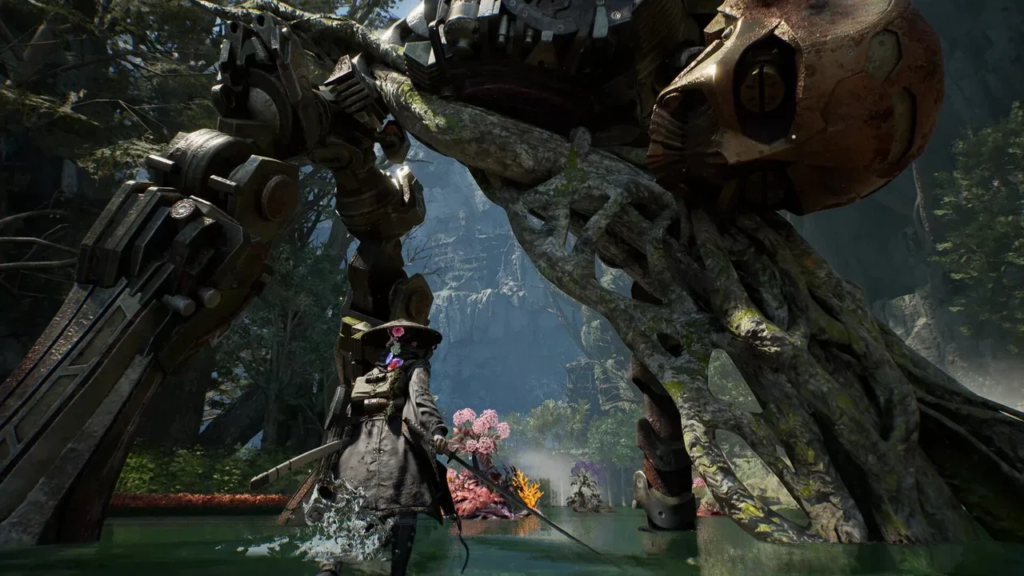
That philosophy has helped to shape the game’s enemies, which appear as mechanical beasts in corrupted biological forms. At least part of your task in-game seems to be cleansing the world of this corrupted biological blight. Presumably the same blight that brought civilisation to collapse in the first place? Something the developers have not yet confirmed. It isn’t the first game to do it, in fact, far from it, but I am always immediately drawn to concepts like this. The reminder that nature was here long before us and will remain long after we are gone. The idea that, despite our perceived freedom in the world, nature is a powerful, mysterious force that will inevitably reclaim what we have taken. I love this kind of world-building.
The result looks like a world that feels strangely beautiful despite its devastation. A blend of overgrown forests, ruined technology and spiritual mythology that has already drawn comparisons to Princess Mononoke and other Studio Ghibli classics.
Still unmistakably Game Freak
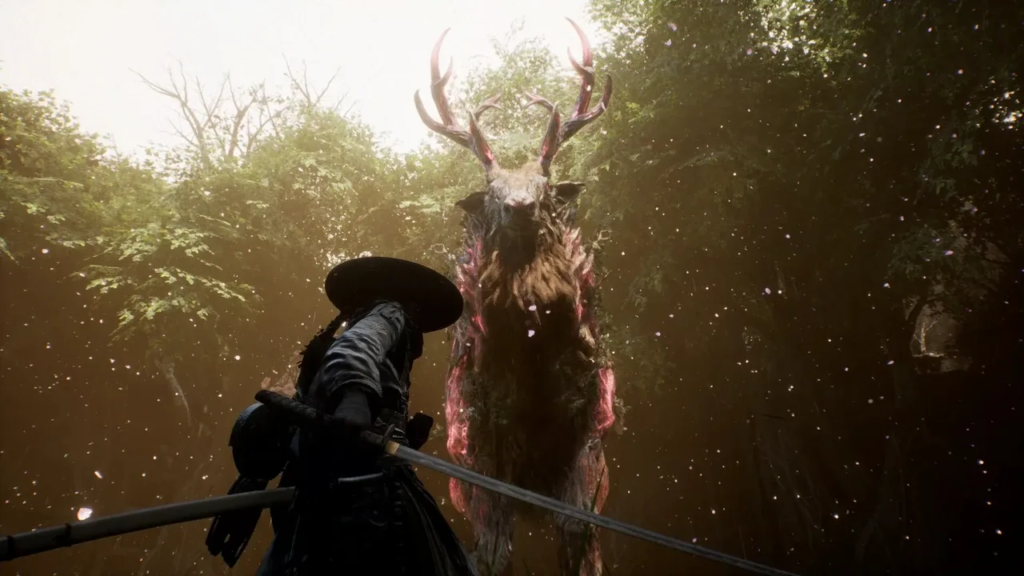
Despite all of that change, Beast of Reincarnation developers insist the game’s creative vision has remained firmly ‘Game Freak’. Whatever that means.
Some of Game Freak’s greatest minds, who have helped bring the world of Pokémon to life over the years, have been working on Beast of Reincarnation. Despite being a relative newcomer to Game Freak, Furushima seems to have been given the freedom to direct the game without too much external input, having personally worked not only as director but also as scenario writer, overseeing everything from story to visual direction before taking it to the team at large to help realise that vision at the scale the project eventually demanded. It’s refreshing to see that level of trust in an industry currently obsessed with metrics, data and money.
That approach hasn’t come without its challenges, though. Game Freak is a famously small team for the sheer amount of Pokémon games it produces. Sometimes being cited as the very reason for the main Pokémon series rigid, conveyor belt quality of late (me, it was me who said that). So, whilst the Pokémon machine continues to churn, how has Game Freak managed to simultaneously tackle a project far larger than anything outside Pokémon they’ve attempted before? With a lot of help, that’s how. Reports suggest the internal team remains relatively small, with much of the production supported by specialist external studios while Game Freak focuses on creative leadership.
A huge moment for Game Freak
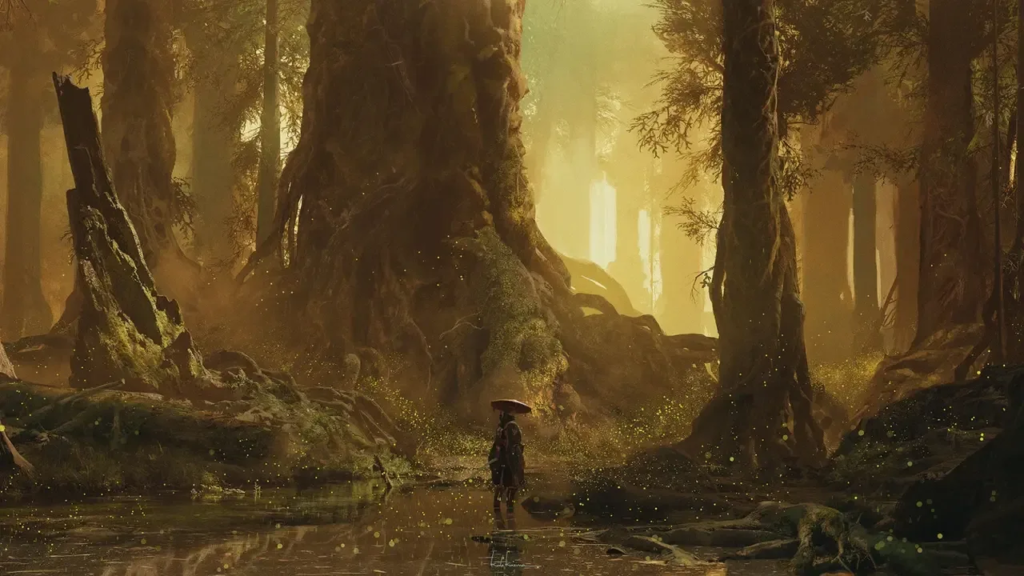
Perhaps the most refreshing thing for me is that Beast of Reincarnation never set out to be a blockbuster. It didn’t begin with a AAA budget or lofty commercial ambitions. It simply came about because one creative had an idea. An idea that resonated with those to whom it was pitched.
Only as development continued did Beast of Reincarnation evolve into one of Game Freak’s biggest productions. That’s a fascinating position to be in for a studio that has spent decades defined exclusively by Pokémon. Should Beast of Reincarnation be a success, what happens then? Do Game Freak invest more time and resources into the development of games outside of Pokémon? Better yet, do Game Freak take some of that creativity, that story immersion, graphical immersion and challenge and apply it to a new “grown up” Pokémon adventure? Obviously, that’s just a pipe dream, but one I would wholeheartedly support.
Whether Beast of Reincarnation ultimately lives up to its enormous potential remains to be seen, but it’s already become one of 2026’s most intriguing action RPGs. Launching for PlayStation 5, Xbox Series X|S and PC, with day-one availability on Xbox Game Pass, it represents not only a brand-new IP, but potentially a brand-new identity for one of Japan’s most recognisable developers. And you know what? I can’t wait to try it.
 VGT-Skyf