

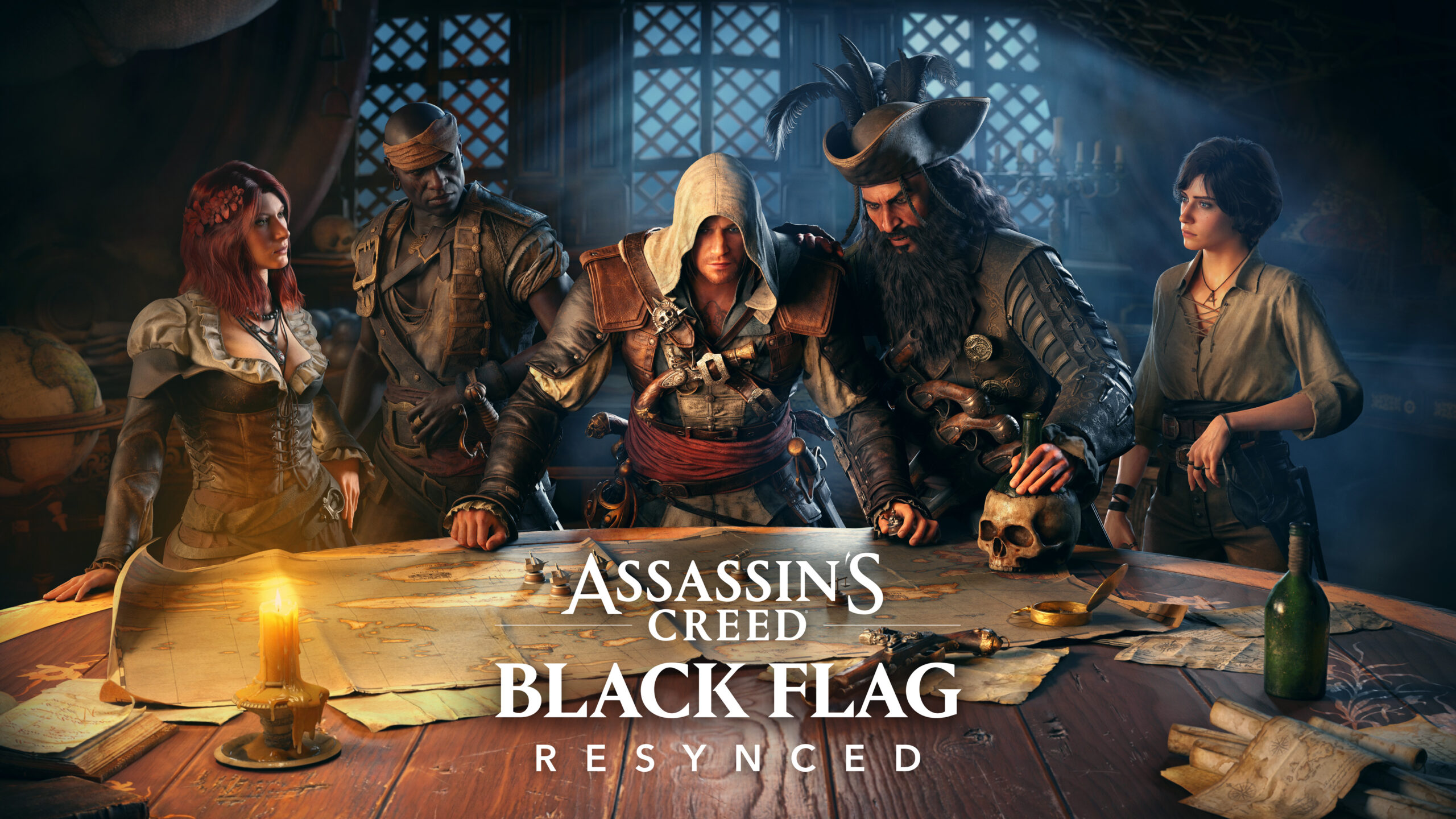
There is something almost perfect about the timing of Assassin’s Creed Black Flag Resynced. Thirteen years after the original, Ubisoft has somehow managed to do exactly what it did the first time around: drop a rich pirate adventure into a market that is weirdly starving for one. Back in 2013, Assassin’s Creed IV: Black Flag was widely received as one of the series’ strongest entries, with praise largely centred on its naval combat, open-world Caribbean and ability to deliver the pirate fantasy better than anything else around it. One old critical take famously framed it as less “Assassin’s Creed with boats” and more “the best pirate game ever,” which, shockingly, still feels like the right read all these years later.
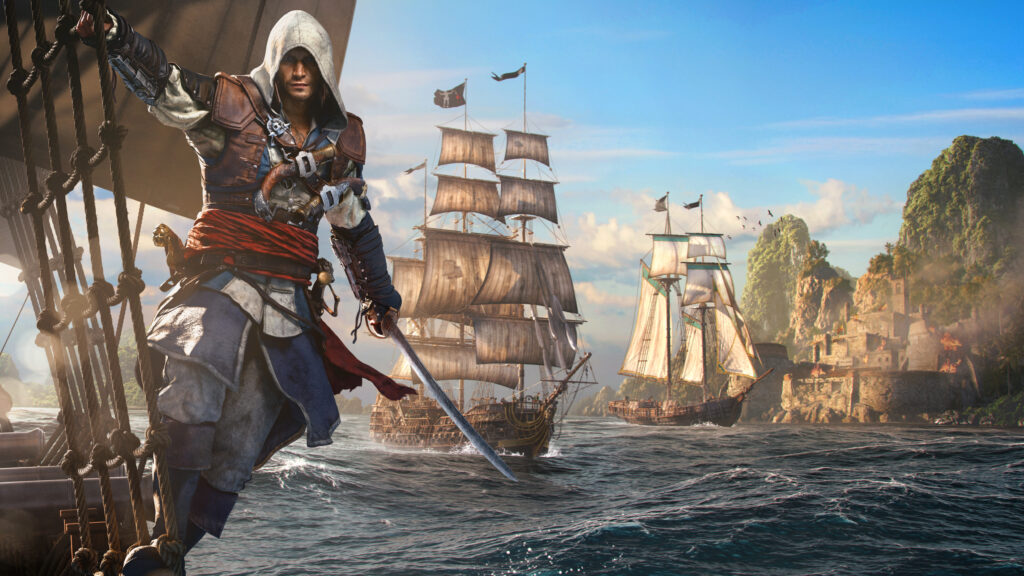
What is strange is that, in all the years since, nobody has really taken that crown. The pirate ARPG space has remained bizarrely quiet. Windrose recently proved there is still a huge hunger for this kind of thing, launching strongly into Early Access with co-op piracy, naval combat, survival crafting, and base-building. It has clearly hit a nerve with players looking for that Black Flag-style itch to be scratched, but even with its success, it still carries the unavoidable texture of Early Access.
Then there is Skull and Bones, Ubisoft’s own attempt to bottle the naval magic of Black Flag and turn it into a live-service pirate machine. Weirdly, its shortcomings might be the best marketing Black Flag Resynced could have asked for. Had Skull and Bones been the rich, characterful, full-bodied pirate adventure players wanted, maybe we would not be quite so desperate to return to Edward Kenway’s Caribbean. Instead, the game landed to weak reception, criticising the repetition, lack of variety, and limited ability to deliver a true pirate fantasy.
That is why Black Flag Resynced feels so tantalising. Not because it completely reinvents itself, but because it largely doesn’t. Ubisoft describes this as a full remake, rebuilt in the newer Anvil engine, with updated visuals, improved stealth, reworked combat, new sea shanties, new story content, ship pets, modernised naval systems and quality-of-life improvements. But the heart of it is still Black Flag. It is still Edward Kenway. It is still the Jackdaw. It is still the thrill of seeing another island on the horizon and immediately b-lining for it, ignoring the main objective because there is a chest, a shanty, a shipwreck or a naval convoy calling your name.
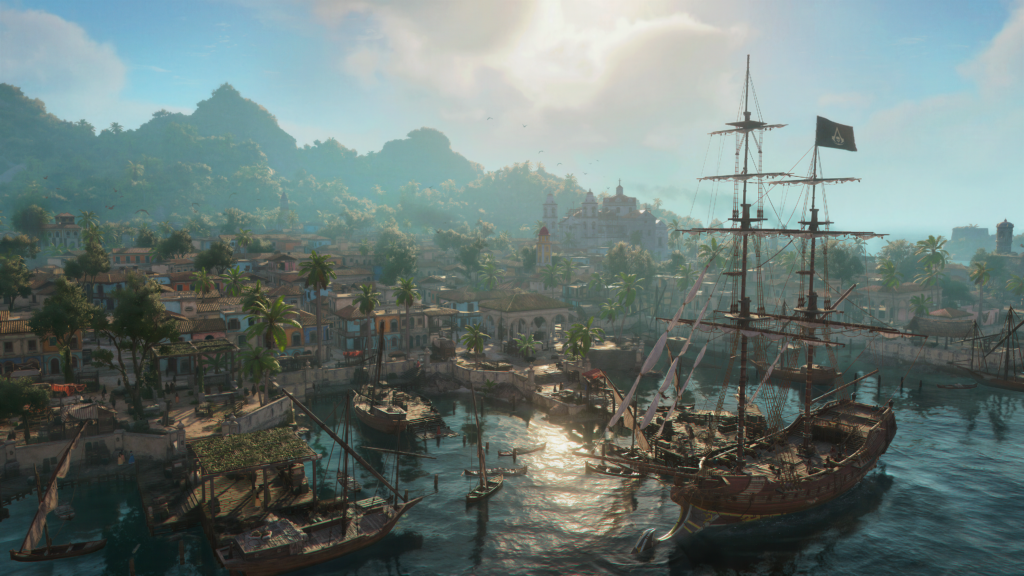
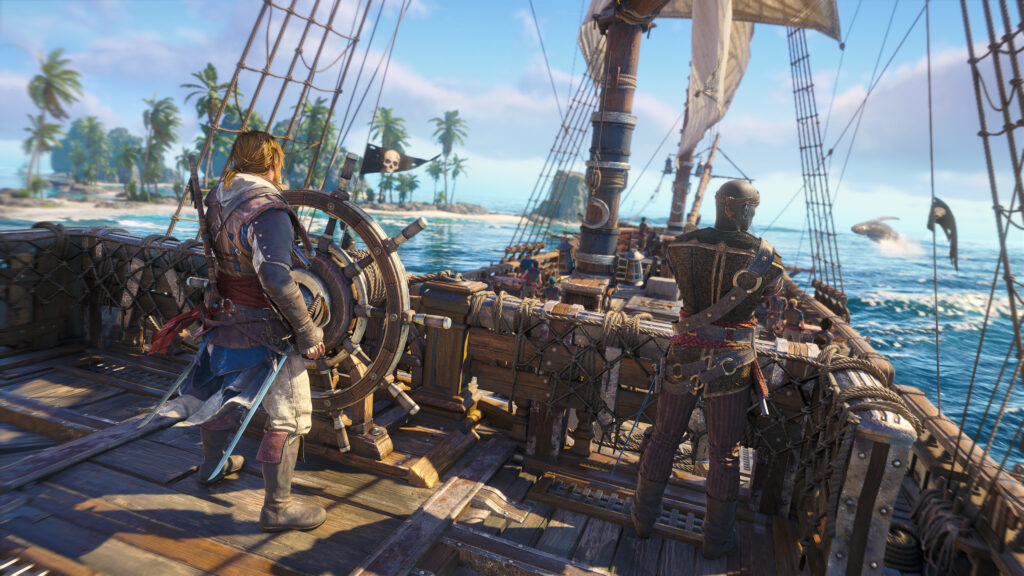
Visually, this remake is absolutely stunning. The Caribbean looks astonishingly beautiful. The lighting is impeccable, the ocean glistens with that almost dangerous holiday brochure energy, and the world feels rich, bustling and lived in. Cities feel warmer and more densely animated, jungles have more depth and atmosphere, and storms roll across the sea with a drama that makes the world feel bigger than the player. Ubisoft’s own breakdown points to ray tracing, improved water, dynamic weather and a full visual rebuild, and those changes make this feel less like an old game being polished and more like a vivid memory being reconstructed in ridiculous detail.
What I love most, though, is the odd balance it strikes. This is a modern-looking game that still fundamentally exists inside a world designed in 2013. That creates a really interesting tension. On one hand, you have stunning lighting, improved character models, richer environments and more cinematic cutscenes. On the other, you still have that golden-era Ubisoft design language: icons everywhere, objectives neatly labelled, systems made incredibly readable, and a world that constantly wants to make sure you are never lost for more than seven seconds.
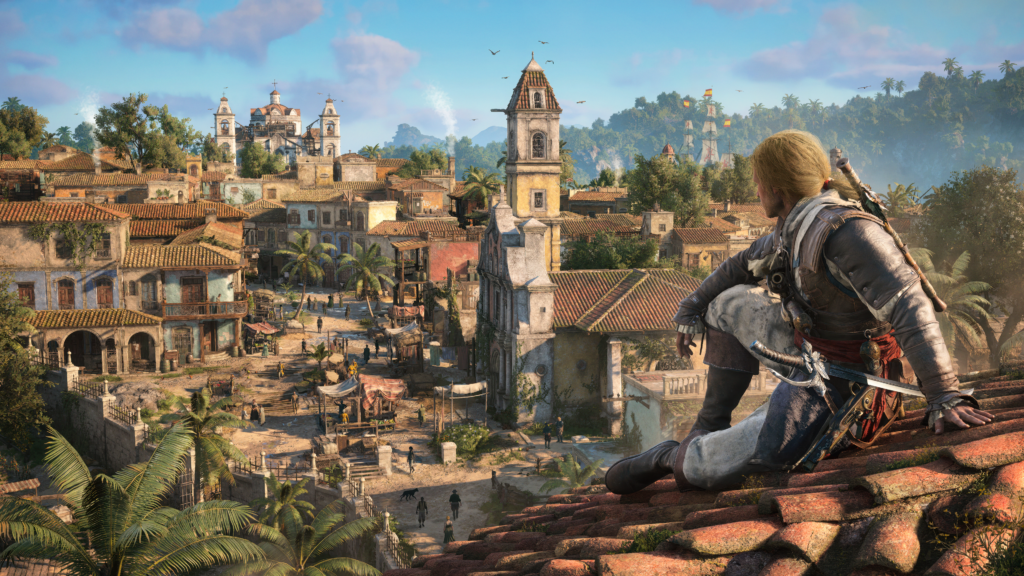
That sounds like a criticism, and sometimes it is, but here it works. Ubisoft are the masters of streamlining experiences until they are almost aggressively user-friendly. Many times, that has tipped into over-simplification, where exploration becomes map-cleaning and mechanics become checklists. But in Black Flag Resynced, it hits a strangely wonderful balance. It shows how far game visuals have come while still delivering a heavy dose of nostalgia for what big open-world games felt like to play back then. It is both modern and old-fashioned, realistic and gamified, cinematic and slightly silly. Basically, it is a lavish 2026 remake that still has the soul of a 2013 Ubisoft game, for better and for worse.
It is also worth saying that the game takes a while to show its full potential. The opening few hours are still fun, but they are more guided and story-driven than the game eventually becomes. There are basically three chapters of setup before Black Flag properly opens the floodgates and encourages you to explore, upgrade, loot and disappear into the Caribbean on your own terms. Once you hit Sequence 4, the game really steps up. That is the point where the remake starts to feel less like a handsome nostalgia tour and more like the pirate sandbox you remembered. Suddenly the map feels bigger, the Jackdaw feels more important, side activities begin to matter, and the game starts trusting you to make your own fun.
The story remains as engaging as I remembered it. Edward Kenway is still one of the best leads Assassin’s Creed has ever had because he is not immediately noble, wise or burdened by destiny. He is selfish, charming, reckless, funny and often completely out of his depth. The remake’s improved facial animation and cutscene presentation give the cast more weight, and it was a real pleasure getting close to these characters again. Blackbeard, Stede Bonnet and the wider crew all benefit from the visual upgrade, and the game’s mixture of historical piracy, personal ambition and Assassin/Templar nonsense still works because Edward’s journey gives it a human centre.
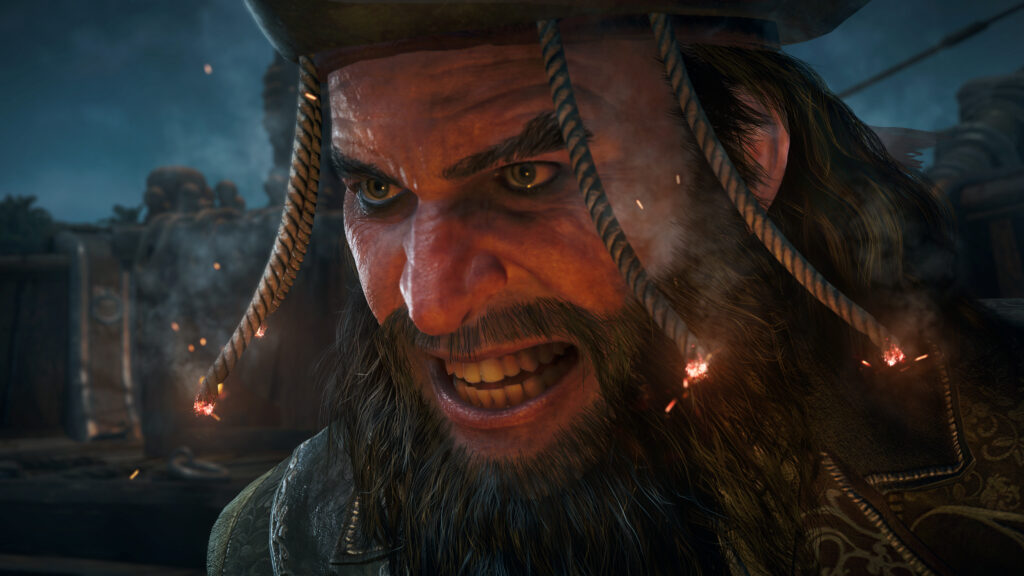
Stealth, however, is where the age of the design shows more clearly. Resynced improves things on paper, with features like crouching on land, updated stealth options and an expanded Observe mode. But in practice, this is still the classic basic stealth formula. It can feel a little clunky, mostly because enemy intelligence still lives in that familiar video game space where guards are either psychic geniuses or completely oblivious potatoes, depending on what the mission needs. This feels less like a specific dig at Black Flag and more like a broader realisation I also had while playing 007: First Light: stealth mechanics as a whole feel like they need a spring clean. We are still doing the same cones of vision, suspicious patrol routes, whistle-from-a-bush routines and slightly awkward detection states we have been doing for years. It works, but it feels very familiar.
Combat has seen a more obvious improvement. The original’s sword fighting felt dated even at the time, relying heavily on easy counters and stylish but low-effort enemy clearing. Resynced is far more engaging. Ubisoft has modernised the combat with a more action-oriented system, new parrying, visceral takedowns, quick-fire rope dart and pistol moves, and a new Demolitionist enemy archetype. The individual difficulty options for combat are also a welcome addition because they let you set the tone of how challenging you want those fights to be.
That does not mean combat is flawless. Even with all these improvements, there is still something Ubisoft cannot quite get right. During intense fights with multiple enemies, the lock-on will sometimes jump to someone miles away rather than the enemy currently breathing down your neck. The camera can become an issue, especially in cramped spaces, and the engine occasionally seems confused about the situation you are in. I have had moments where stealth kills were available even though the enemy clearly knew I was there, or finishers triggered when an enemy did not appear to have their stagger gauge filled. Sometimes an enemy looks completely focused on one of your shipmates, then suddenly attacks you while still visually acting like your mate is the target. It creates some clunky moments, but even with all that, the combat is still much more fun and engaging than the original.
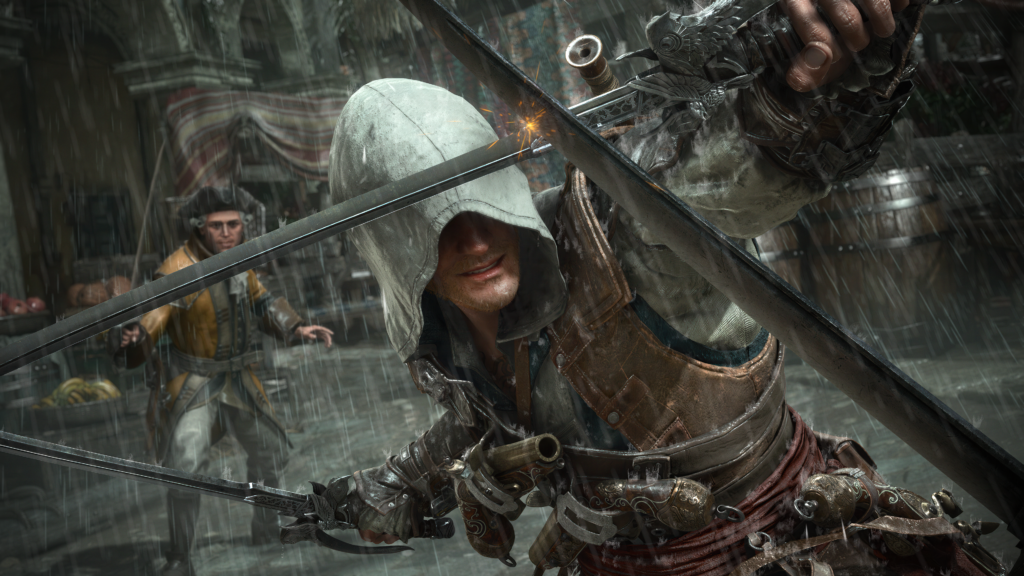
Naval combat, meanwhile, remains as frustrating and brilliant as ever. This is where the game feels welcomely imbalanced. Early-game naval battles are genuinely tough, especially compared with hand-to-hand combat on the same difficulty. You feel underpowered. You feel vulnerable. You are desperately trying to line up broadsides, avoid incoming fire, repair when possible and survive long enough to board. That challenge makes the reward feel better. When you finally cripple an enemy ship, pull alongside it and send your crew storming across, it feels earned.
The Jackdaw progression loop is still one of Ubisoft’s finest. Upgrading your hull, broadside cannons, mortars, storage, swivel guns and other ship systems gives the game a constant sense of forward motion. Every successful battle feeds into the next upgrade. Every upgrade makes you feel slightly more capable of taking on bigger prey. Resynced also adds new naval features and customisation, including new ship skins, ship pets and reworked ship systems, while keeping the core fantasy intact: turn this scrappy vessel into a floating nightmare and make the Caribbean terrified of your postcode.
The open world is still classic Ubisoft. Basically, the general placement of everything is marked on the map for you. It often substitutes the freedom of discovery for a simpler collectathon structure. You are not always finding things because you noticed a strange shape on the horizon or followed a rumour; you are often finding things because there is an icon and your brain has been trained to remove it. But I would be lying if I said it did not work. Collecting every sea shanty, opening every chest, hunting every upgrade and clearing every activity has that satisfying checklist feel, very similar to the Insomniac Spider-Man games. It is not always intellectually demanding, but it is dangerously moreish.
This is also why the side content matters far more than I expected. Once the world opens up, there is a tonne of non-main quest stuff to do, and most of it feels worthwhile because it feeds into something tangible. Building out your base is a lot of fun, and the game gives you plenty of reasons to engage with the side activities attached to it. Great Inagua is not just a backdrop; it becomes a growing home for your pirate life. Hideout upgrades, ship development, resources and money all give side content a sense of purpose. Even smaller, more menial tasks have value because gold and materials are always needed somewhere.
The stronger side missions are not just one-and-done distractions either. Many of them feel more like full questlines, giving you more time with the world and its characters. The remake also expands exploration in smart ways, with reports highlighting new shipwrecks, secrets and the ability to dive anywhere, which gives treasure hunting more freedom than the original’s more limited diving-bell structure. This matters because Black Flag is at its best when the main story, side content, upgrades and exploration are all feeding into the same fantasy. You are not just ticking boxes. You are building a pirate life.
There is also extra content at the end of the game that expands the story further than the original. I will not spoil any of it here, but it is a great addition and absolutely worth seeing through. It gives Resynced a stronger sense of being more than just the same game with shinier water. The main appeal is still the original adventure, but the new material adds enough extra texture to make returning players feel like there is buried treasure waiting for them too.
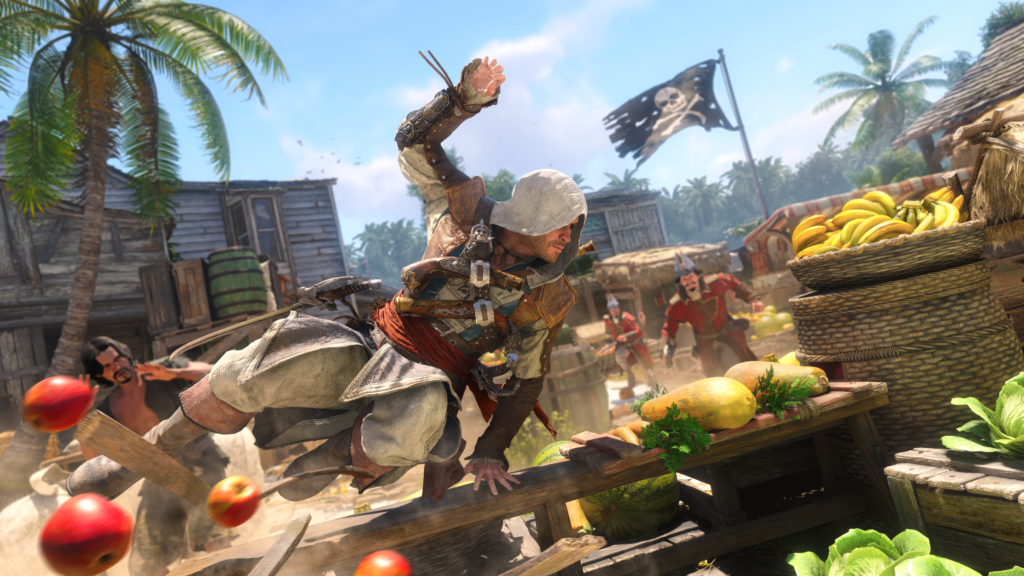
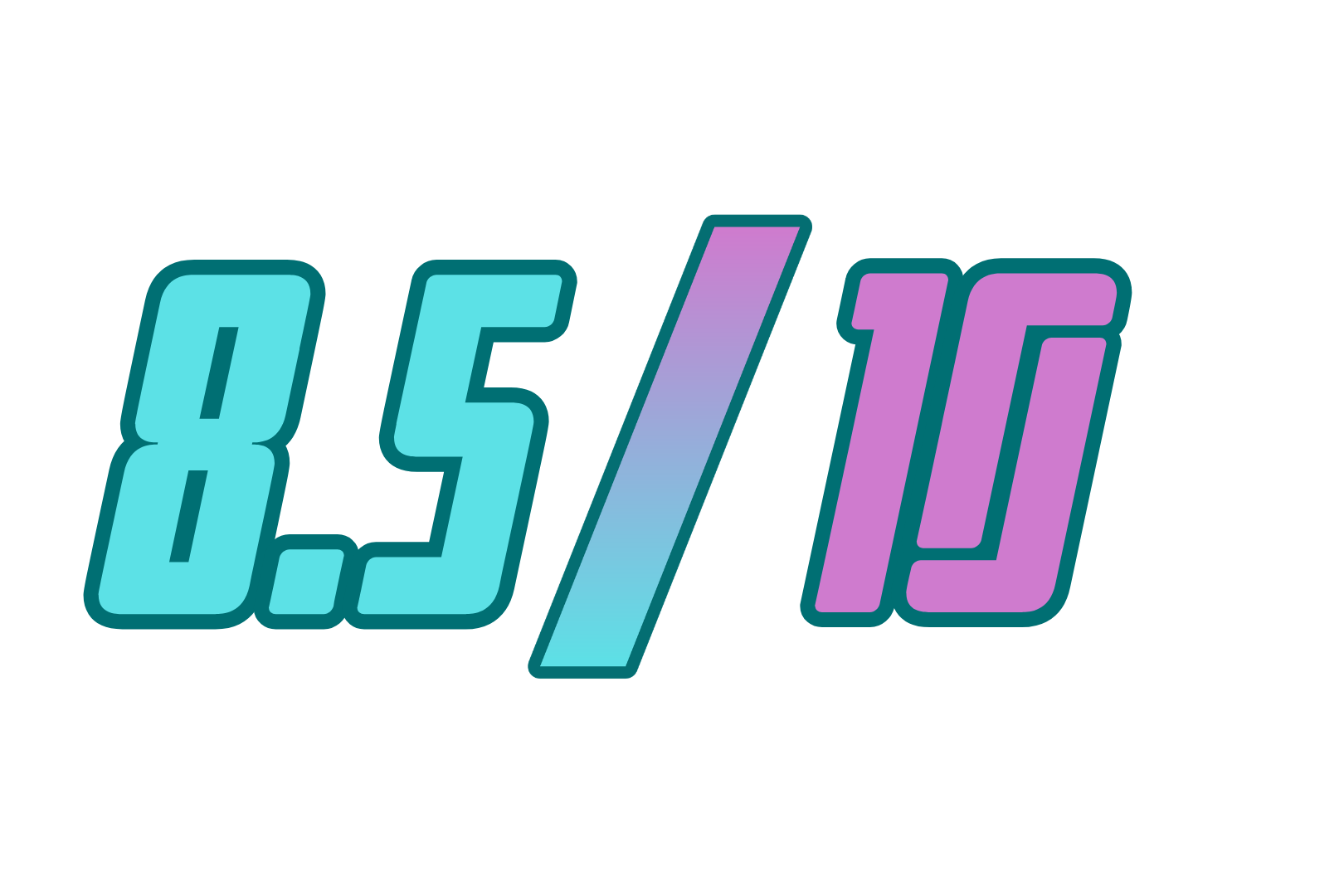
In the end, Assassin’s Creed Black Flag Resynced works because Ubisoft seems to understand what people actually loved about Black Flag. Not the lore spreadsheet. Not the modern-day interruptions. Not the tailing missions. The ship. The sea. The songs. The crew. The feeling of sailing away from responsibility because there is another island over there and, frankly, Edward Kenway has never been emotionally equipped to walk past a treasure chest.
It is not a radical remake. It is not a complete reinvention. It is still clunky in places, still very Ubisoft, still slightly too pleased with its map icons and still built on design foundations from over a decade ago. But that is also the magic. Black Flag Resynced proves that sometimes the best remake is not the one that tears everything down. Sometimes it is the one that understands the original was already special, gives it modern tools, adds a few new tricks, and then gets out of the way.
Thirteen years later, Black Flag remains virtually uncontested as the quintessential pirate adventure. Resynced does not change that. It confirms it.
 VGT-Skyf