

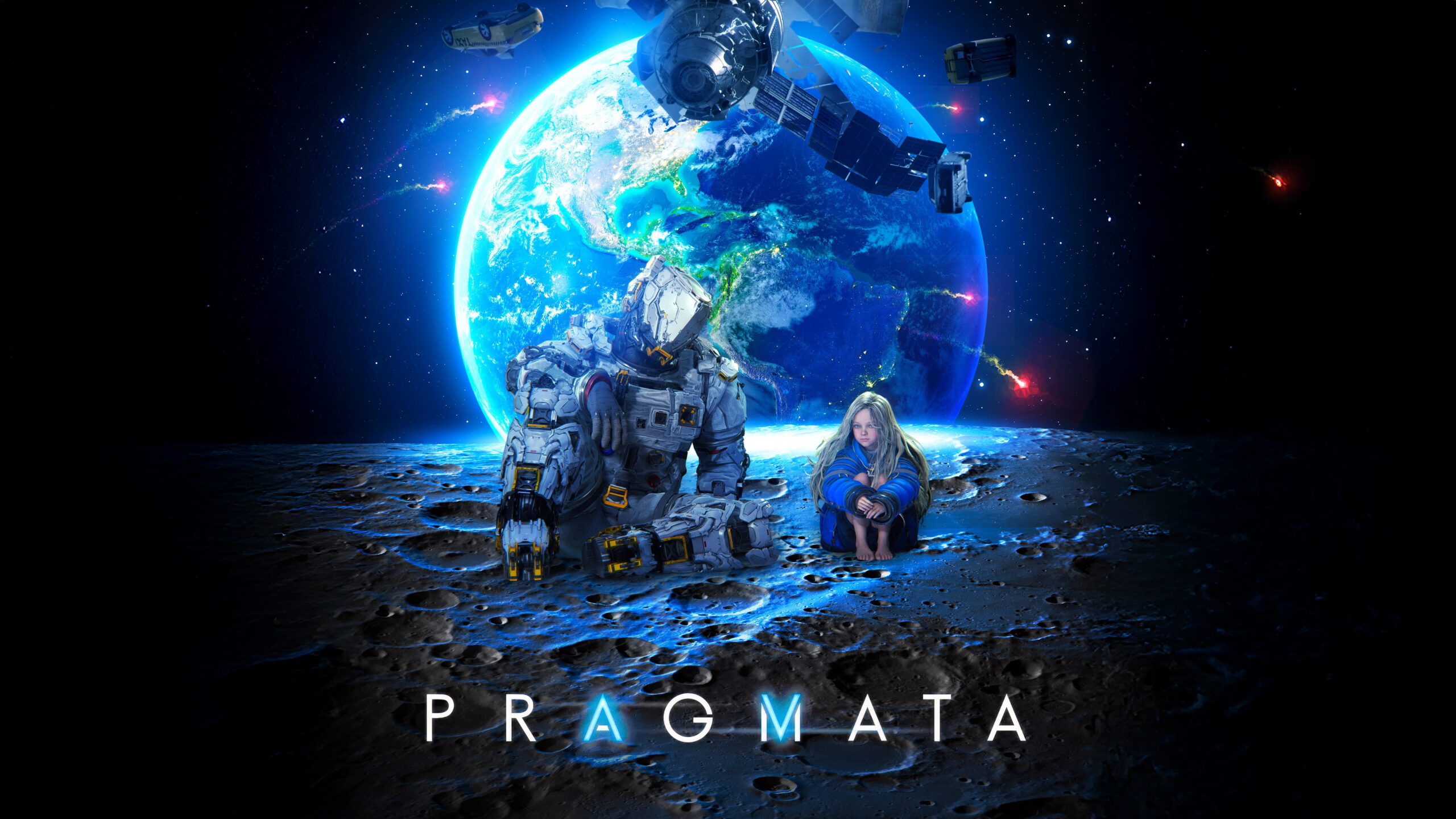
I’m going to start this one as plainly as I can. Pragmata is special. Maybe even so special that it should be recognised as a wake-up call for damn near every other big-budget triple-A developer out there making big-budget, bloated action games. Pragmata serves as a reminder that 100-hour runtimes, bloated open worlds and more mechanics than Kwik-Fit are not the essential ingredients for making a game that feels like a genuinely important addition to the gaming space. After years of waiting, many of us, myself included, felt like Pragmata was following the same played-out rulebook of so many of gaming’s recent flops. Delays, on delays, on top of more delays, before a half-baked, confused version of the original concept carves out a 120 GB chunk of our hard drives. Yet to my astonishment, Pragmata’s modest 35 GB install size is just the tip of the iceberg when it comes to reasons you should be excited about this game. How many times do you hear the same old trope when a video game gets delayed? Where developers say, “We have delayed the game to give ourselves the time to create the game that the fans deserve”. And how many times has that truly been the case? Well, let me give you the topline… When Capcom said it. Capcom meant it.
Capcom’s brand new mainline IP (the first since Dragon’s Dogma was released on May 22, 2012) has landed with impact, and I can safely say, with so much of the year left to go, this will be one of the best games of 2026. More than that, it feels like yet another sign that Capcom are operating on a different level right now.
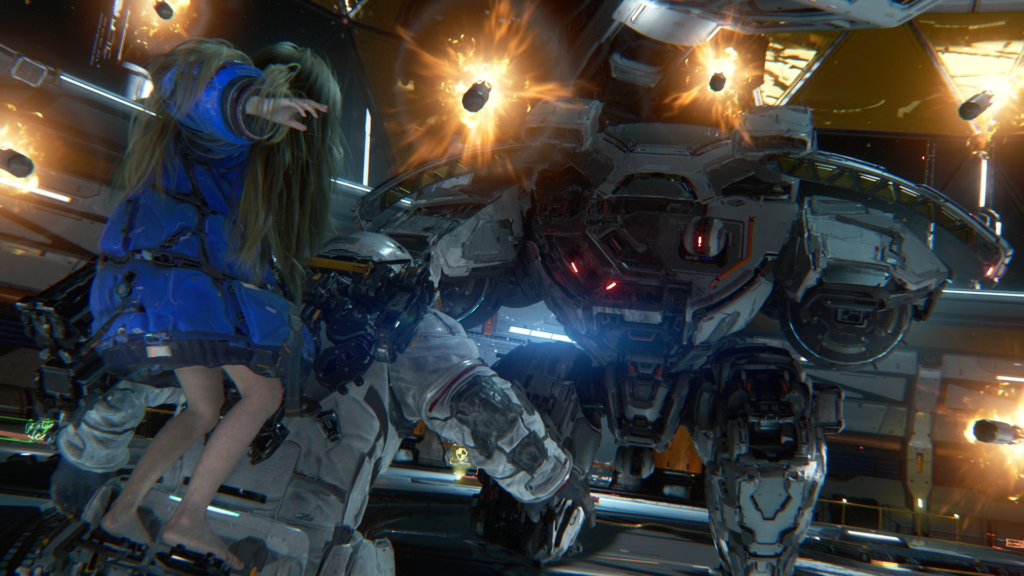
Whilst a lot of modern action games chase scale: bigger maps, more systems, more stuff. Pragmata goes the other way. It’s focused and refreshing. More than that, it knows exactly what it’s doing.
At the centre of it all, you’ve got astronaut Hugh Williams and his android companion Diana, stuck in a lunar facility that’s gone very wrong. Now, that setup is pretty familiar. A rogue AI, an abandoned space station and a grizzled protector with a childlike companion. We’ve seen that before. What makes Pragmata stand out is that Diana isn’t just there for the story; she isn’t a token second playable character to break up play. No, Diana is the gameplay.
Everything revolves around this duo. Hugh handles the shooting, movement and survival. Diana handles combat hacking, door unlocking and QTEs. The game is constantly asking you to utilise both roles at once. Even when the story leans into familiar sci-fi territory, that gameplay relationship keeps things feeling fresh.
And that leads straight into combat, which is easily the standout here.
Pragmata’s “hack-and-shoot” system is one of those ideas that sounds incredibly messy. I’ll admit this was my biggest fear for the game, so much so that it was almost expected. Yet against the odds, Capcom have pulled it off! Pragmata’s combat feels incredible. You’re controlling Hugh in real-time combat whilst also running Diana’s hacking puzzles alongside. You’re opening up enemy weak points and exploiting nodes to add debuffs mid-fight, making split-second decisions about routes, risks, and rewards.
It’s tense, but easy to get the hang of. An immensely important characteristic that avoids overwhelming the player. Not only that, but it is quite remarkable how well Capcom have actually done this. It’s an impressive feat. You’re constantly juggling information such as enemy patterns, arena space, hacking paths and node choices. All whilst aiming, manoeuvring obstacles, dealing constant physical damage and positioning yourself correctly to take advantage of exposed weak spots. Just reading that last sentence is exhausting, and yet somehow, in-game, it all just clicks.
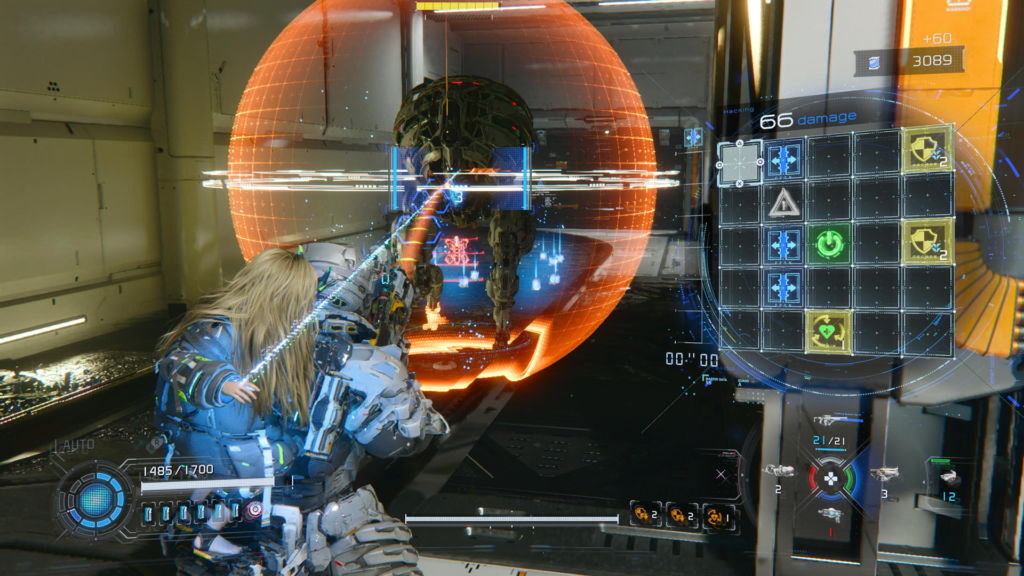
What’s impressive is how well the game balances that complexity. As the game progresses, it consistently adds new ideas. Different hacking nodes, multiple weapon types, varied enemies, status effects and environmental effects. There’s so much to contend with, but it never tips over into frustration. There’s also real depth here if you want to master it, but it never feels like it’s collapsing under its own ambition.
Weapons and enemies aren’t just there for variety either; they actually change how you think. Some enemies demand priority targeting. Some bosses force you to rethink positioning entirely, and some weapons don’t just deal damage; they reshape how your hacking works.
This isn’t a thinly veiled gimmick. It’s a system that keeps evolving.
And the game wastes no time getting you into that loop.
Upgrades come quickly, and they matter. You’re not waiting hours for the game to “get good.” New guns, new hacking tools, new abilities, character stat upgrades, they come thick and fast, and they keep the experience feeling alive. Most importantly, they all feel great. It makes the game’s pacing feel almost arcade-like.
My biggest complaint here is how short the game is. Most playthroughs land somewhere around 10 to 15 hours, and I’m not one to complain about shorter, well-designed games, but I had so much fun playing it I couldn’t help feel a little short-changed after it all came to an end. It’s tight, focused, and doesn’t waste your time. That being said, its short campaign allows Pragmata to achieve a feat rarely seen in modern titles. There are no dips, no mid-game lull, and little repetition. Every moment of the game feels purposeful and exciting.
Boss fights follow that same philosophy. They’re not always brutally difficult, but they’re consistently fun. Some lean more towards spectacle than challenge, and a few can feel a bit spongy depending on your build, but they feel like proper set pieces, not roadblocks.
And yeah, you might finish it wanting more, but I guess that’s kind of the point, right?
Pragmata’s character build system allows you to be genuinely creative in your approach to combat. Meaning future play-throughs allow for player autonomy and unique ways to play.
Hacking begins as a complement to the action, but in the late game, it can actually outperform the weapon damage depending on build choices.
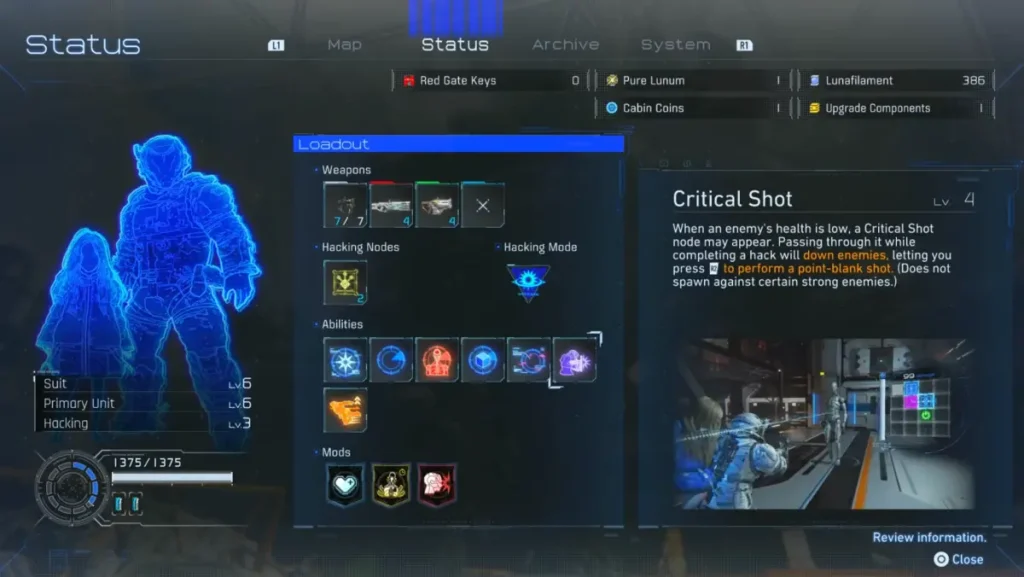
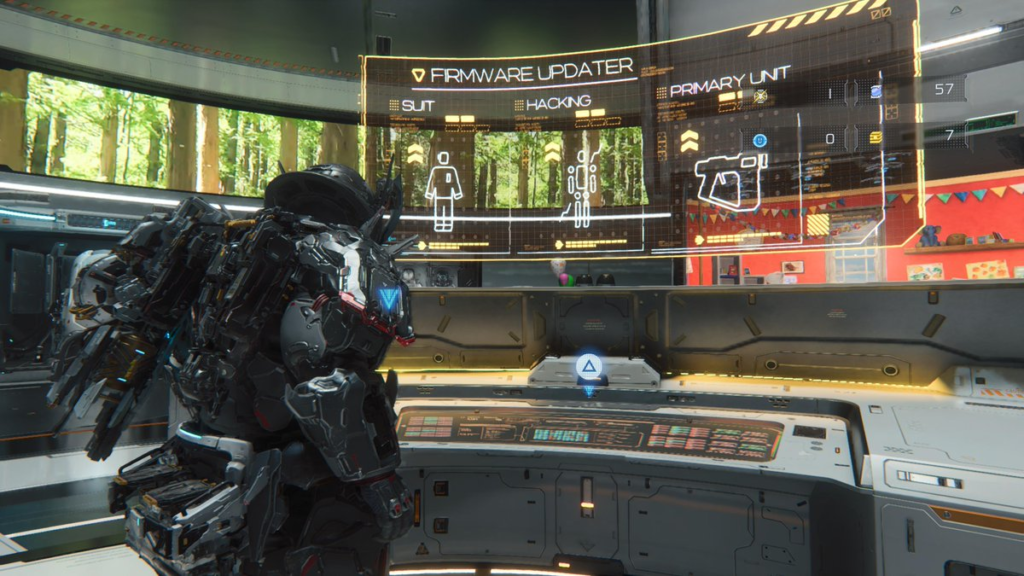
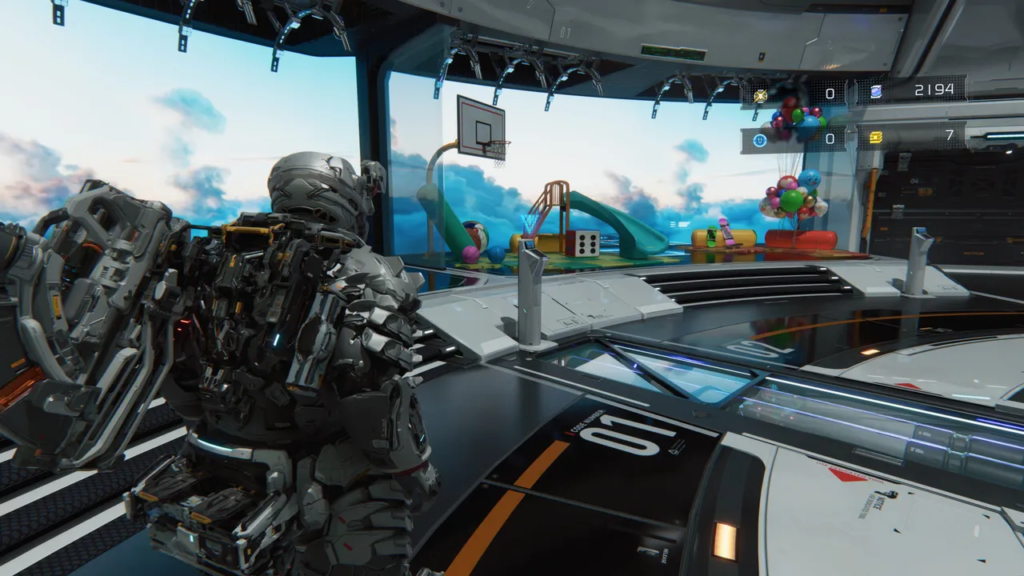
Outside of combat, the Shelter hub quietly ends up being one of the game’s strongest features. It’s not overdesigned or overwhelming. Instead, it exists more like a sanctuary for in-game lore, developing inter-character connections, cosmetics, character builds and as a display case for collectables. It’s a nice touch. Making exploration feel tangible, rather than just a number on a screen tucked away in a menu somewhere.
All of those systems: upgrades, training, unlockables. They all loop back into the main game. There’s even a kind of soft “return and improve” structure built through a ‘load out’ system that almost feels roguelike-adjacent, even though it’s not one.
For completionists, the way the game tracks area progress is a small but brilliant touch. It turns cleanup into something focused rather than aimless wandering.
Even the challenge content holds up. Training missions could’ve easily been filler, but they actually help you understand the systems better. They reward you properly, and more importantly, they become more fun the better you get. Think MGS VR missions, but less to teach you the systems and more for you to have fun with them.
While exceptional, Pragmata isn’t perfect. Hugh, as a character, is probably the weakest part of the whole experience. The relationship between him and Diana works, but Hugh himself? He’s a bit flat. A bit muted. He hints at a dark start to life, being an orphan, but the game doesn’t really explore that part of his backstory. Everything after he mentions that seems like he had a very peachy life. There’s just not quite enough there emotionally to anchor Hugh as a protagonist that sizes up to his video game father figure counterparts, such as Joel from The Last of Us or Lee from The Walking Dead Telltale series.
Replayability is also worth setting expectations for. There is stuff to do. There’s a New Game Plus, more challenge modes, and a whole new area for you to explore, but it’s not the kind of game that you will sink tens of hours into, post-game or one that radically changes on a second run. You’re not getting wildly different outcomes or routes.
Instead, replay value comes from mastery, exploring different playstyles, getting better at the systems and cleaning up what you missed. Ultimately, replayability comes down to whether you enjoyed the combat enough to go again. For me, that was well worth it!
Pragmata feels like one of the most encouraging AAA releases in a while. It doesn’t change the face of gaming, it doesn’t raise the bar or set a new benchmark for single-player games, but it does deliver a consistently fun, exceptionally well-designed, refreshing experience. Most importantly, it delivers it with a confidence that almost feels rare in today’s gaming ecosystem. No major fixes, no big post-launch patches, no nefarious industry practises. Just a really good, complete game delivered as promised.
Capcom are on top right now; they might understand blockbuster action design better than anyone. It’s for all those reasons that we are giving Pragmata…

Footnote:
Pragmata throws a real spanner in the works where 2026’s Game of the Year is concerned. There are only six places available, and for me, Capcom has already secured two of those slots with Pragmata and Resident Evil Requiem. Crimson Desert is likely to find itself in the conversation and with Fable, Wolverine, Saros, The Duskbloods, Forza Horizon 6, Phantom Blade Zero and GTA6 still on the horizon… The rat race is on.
 VGT-Skyf
[…] In April, Pragmata captured the hearts and minds of doting Dads and brooding Mums, all across the internet. Joe was no different – watching him stream it was a joy, and so far is perhaps his strongest contender for his pick for Game of the Year. You can check out Joe’s Pragmata review here. […]