

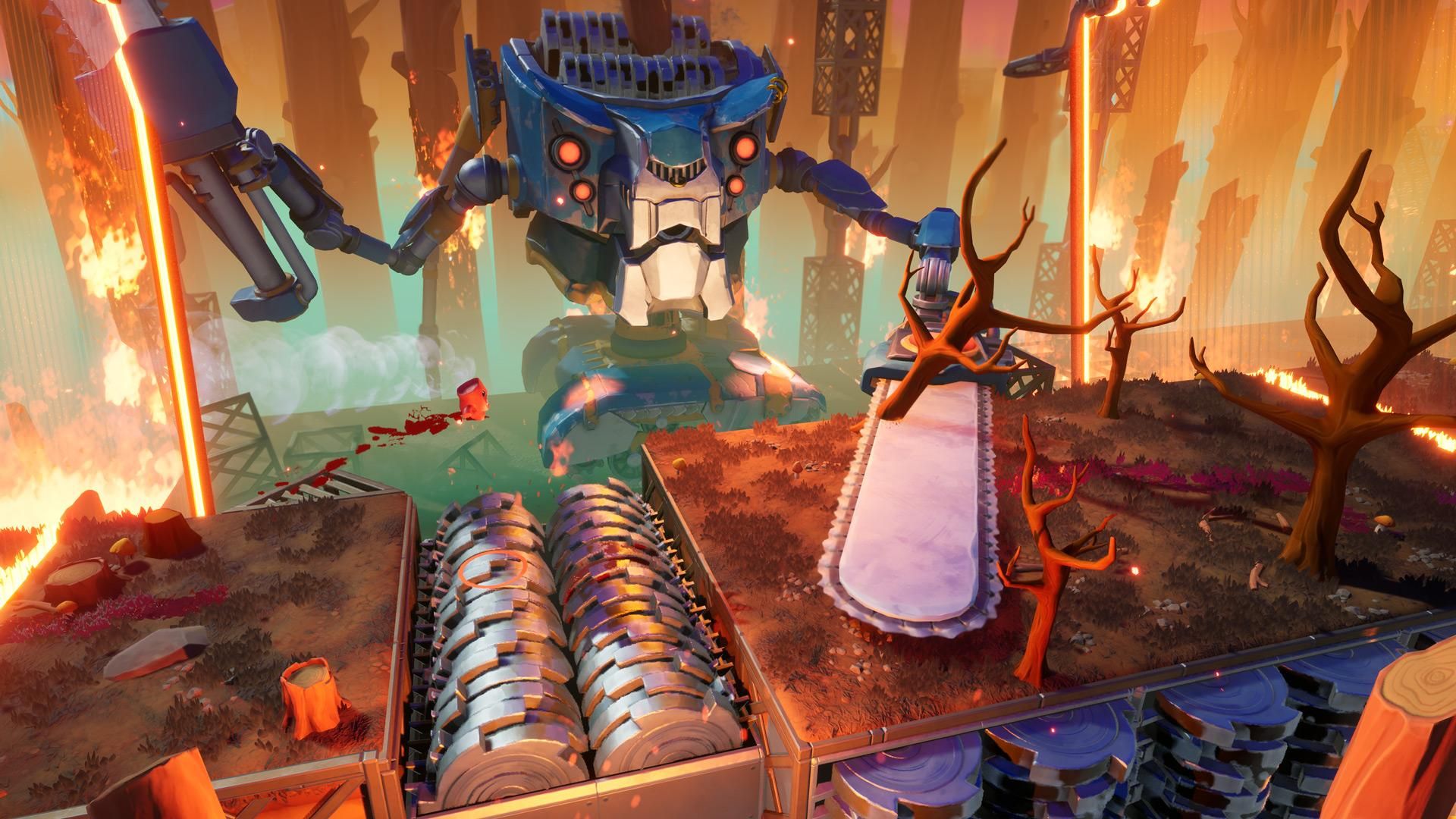
There’s a phenomenon in the world that I have coined The Consummate Paradox. Hybrid Theory by Linkin Park, The Matrix and Steak are all examples of The Consummate Paradox. It’s the idea that something is just so perfect that it doesn’t need revisiting. Yet, it is paradoxical in the sense that we all love it so much that we yearn for more. Meteora is a great record, but it’s not Hybrid Theory. Steak bao buns are lovely, but nothing beats a straight-up slab of steak. Super Meat Boy is a perfectly cooked, perfectly seasoned, perfectly seared steak. It’s not just a good platformer, it’s the masocore platformer. Precision. Speed. Instant restarts. Pain, distilled into something insanely addictive. So when you hear the words “Super Meat Boy,” naturally, we want more. Yet, when you hear the words Super Meat Boy 3D, you can’t help but wince. It’s like a steak with chocolate sauce. Sure, I love steak. I love chocolate, but together? I’m not so sure. Super Meat Boy in 3D? Is that going to work? Honestly? I’m still not entirely convinced it does.
When I review sequels, I always feel a little conflicted. Do I take the game at face value? Or do I compare it to what came before? On one hand, a game can be perfectly fine as a standalone entry. On the other hand, a sequel comes with an underlying expectation. It is impossible to ignore the weight of what its predecessors brought to the table. With Super Meat Boy 3D, this is particularly difficult. On its own, the game is actually an incredible experience. Against all odds, Super Meat Boy 3D actually captures the core loop that made the original so compelling. Levels are short, deaths are constant, and restarts are near-instant. You’re still learning through failure, building muscle memory, and shaving seconds off your runs until everything clicks. It’s that same “just one more go” energy that made the 2010 original legendary. All of that remains intact.
Movement feels fast and fluid, and the added dimension opens up some genuinely interesting challenges. Wall-running, diagonal jumps, depth-based platforming. There’s a higher skill ceiling here than ever before, especially for speedrunners who are going to absolutely break this thing in half. On its own, it feels like an indie title we should be shouting about. But as a sequel, it’s a slightly different story.
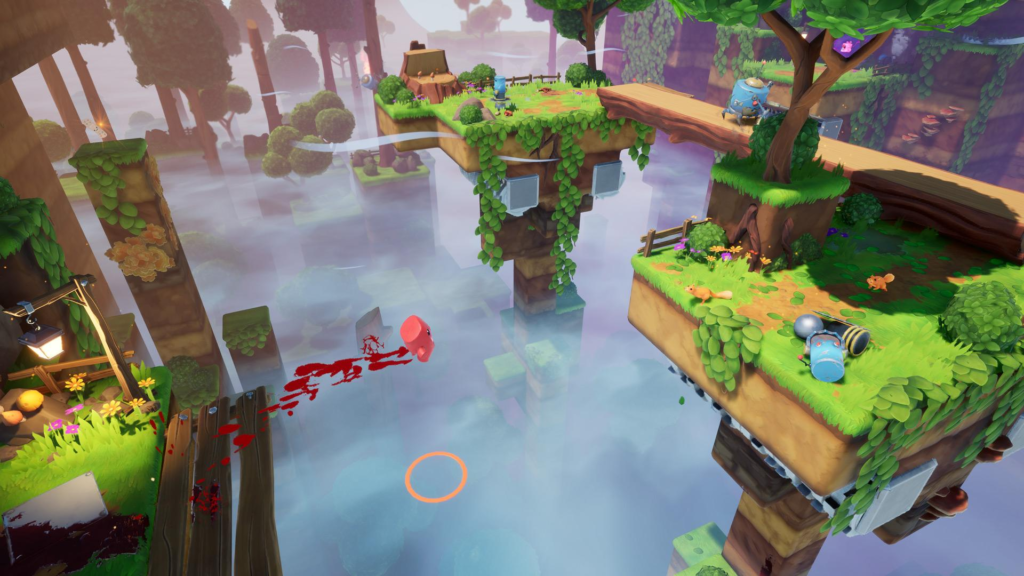
Here’s the problem. Precision.
Super Meat Boy lives and dies on precision. And the moment you move that formula from 2D to 3D, things get… messy.
Depth perception is a constant issue. Jumps that look right are often wrong. Angles become much harder to read. In 2D, there was a fixed route to the goal. Often just one way to complete a level with an A+ time score. Jumping to 3D and adding all those extra degrees of movement takes this out of the game. Suddenly, there are many more ways to reach the finish line. For a game built around the idea that every death is your fault, even a slight sense of unfairness starts to erode the whole experience.
It isn’t that the transition is sloppy; it’s not that it’s poorly done. It’s more that it undermines some of the core values that made the original so addictive. That, unfortunately, creates a weird tension at the heart of the game.
Don’t get me wrong, this is still Super Meat Boy. It’s still brutal, still fast, and still satisfying. But it’s also fighting against its own new dimension. When you die, you will often find yourself thinking “I’ve been robbed” rather than “I messed that one up”.
Because of this, Super Meat Boy 3D sits in a weird space. What you’re left with is something that feels like both a success and a misstep at the same time.
A bold evolution that almost works. A faithful sequel that doesn’t quite understand why the original was so perfect. Yet still a relentlessly fun game in its own right.
Ultimately, whether you are a newcomer to the franchise or a returning fan, this is a game you can still enjoy. The original, though, remains the premium way to experience Meat Boy. If you are a newcomer, I’d recommend just playing that instead.
A solid entry, but a reminder that more dimension doesn’t mean more fun.

 VGT-Skyf