

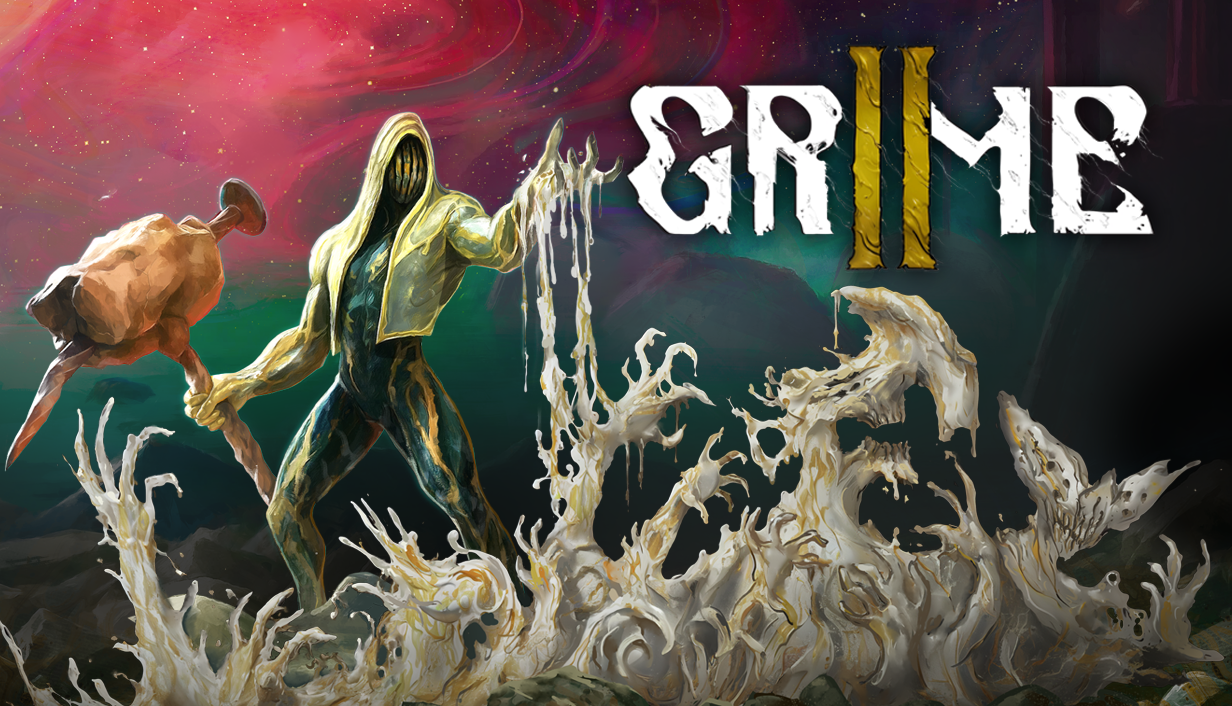
Ah, can you feel that? It’s the crushing weight of expectation. The kind of expectation that comes with a sequel like GRIME II. The original GRIME carved out a strange, unsettling niche in the Soulslike-metroidvania space (yes these subgenres are getting out of hand now!) It was a delightful combination of grotesque and mesmerising. Even though combat felt a little clunky and movement felt a little floaty, it managed to win me over nonetheless. So the question hanging over its successor isn’t just “is it better?” but “does it evolve?”
The answer, broadly, is yes. But what’s more interesting is how it evolves. Less by reinvention, more through refinement and confidence in its own identity.
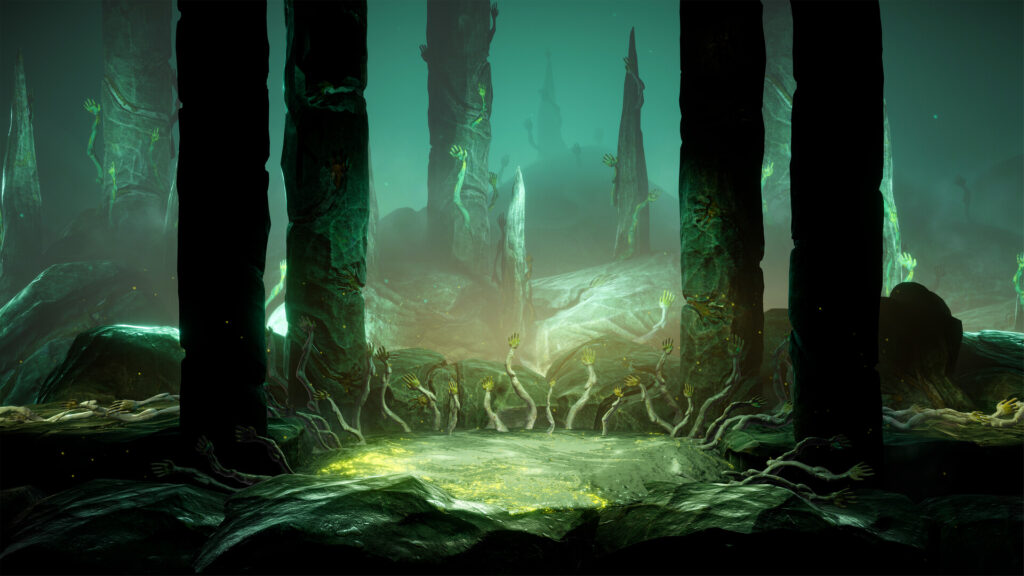
One of the most immediate improvements is the world itself. Where the first game often felt claustrophobic (intentionally so) GRIME II opens things up without sacrificing its oppressive tone. The environments are larger, more layered, and feel meaningfully interconnected. Basically the exact opposite of mega cats’ attempt at a God of War Metroidvania. GRIME II’s world is cleverly designed. It gives the player just enough freedom to have you believe that you aren’t being guided down the games intended path, it will allow you to take wrong turns and find out the hard way. The design is very intentional and right up there with the best in the business. Not just for its masterful cartography, but also for its stunning visuals. GRIME II combines the intricate interconnectivity of Hollow Knight with the beauty of the Ori series.
There’s a stronger sense of environmental storytelling this time around. Instead of relying heavily on obscure lore fragments, the world communicates through its design. Towering organic structures loom in the distance, and each area feels like part of a living, decaying ecosystem rather than a sequence of isolated zones.
It’s still deeply strange though. This is a universe built from flesh, stone, and other-worldly geometry but, this time, instead of just repeating the anatomical horrors of the first game they have expanded it into a literal, living, breathing world. They have really fleshed it out… eh? You liked that one didn’t you?
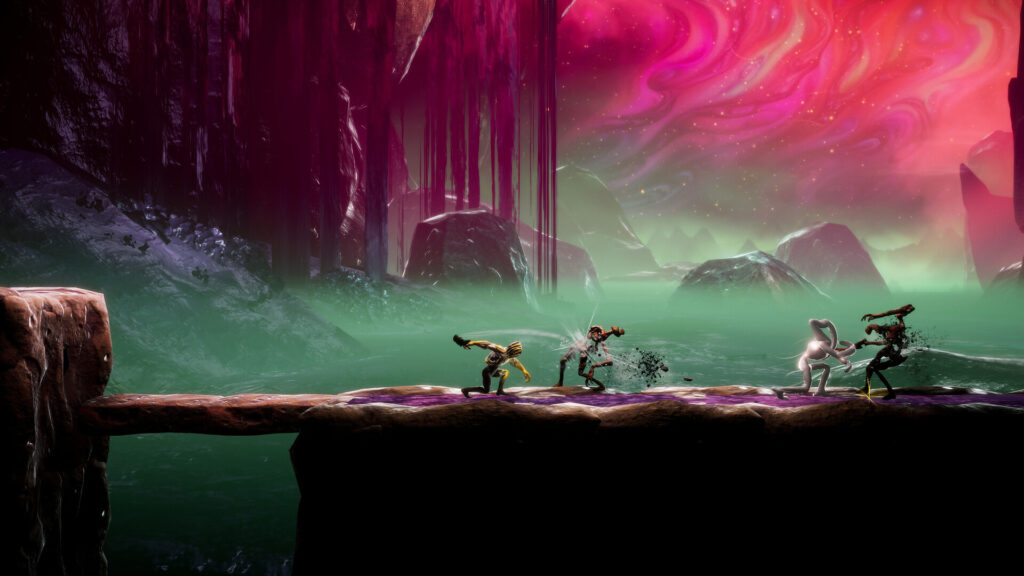
If the original GRIME had a defining weakness, it was its stiffness. Combat was the central feature of GRIME and yet I couldn’t shake the feeling that they just didn’t fully get it right. It often felt like the combat mechanics themselves were a frustrating enemy I was constantly up against. GRIME II addresses this directly.
Movement is quicker, inputs are WAY more responsive, and combat flows with a satisfying rhythm. The absorption mechanic has been expanded and refined, with clearer player feedback and more forgiving timing windows. I can almost hear the masochists wincing from here. “Forgiving timing windows?! Who would want such a thing?” but there is a distinct difference between a well tuned difficulty system and one that, at times, makes death feel like an inevitability rather than something that could be controlled. GRIME II has evolved to sit firmly in camp A with a stronger sense of learning and mastery. Enemy encounters feel like tests of understanding rather than endurance. When you fail, it feels deserved.
That said, the game isn’t without its rough edges. Certain sections introduce difficulty spikes that can feel abrupt, particularly when multiple aggressive enemy types are combined. These moments don’t break the experience, but they do occasionally disrupt its pacing.
Progression has also seen meaningful improvements. GRIME II offers more clarity and flexibility in how you build your character.
Abilities are easier to understand, upgrades feel more impactful, and there’s a clear sense of direction when developing a playstyle. The game encourages experimentation without punishing commitment, which makes progression feel accessible and rewarding.
It strikes a careful balance maintaining its cryptic tone while removing just enough friction to keep players engaged rather than lost.
Visually, GRIME II is as striking.
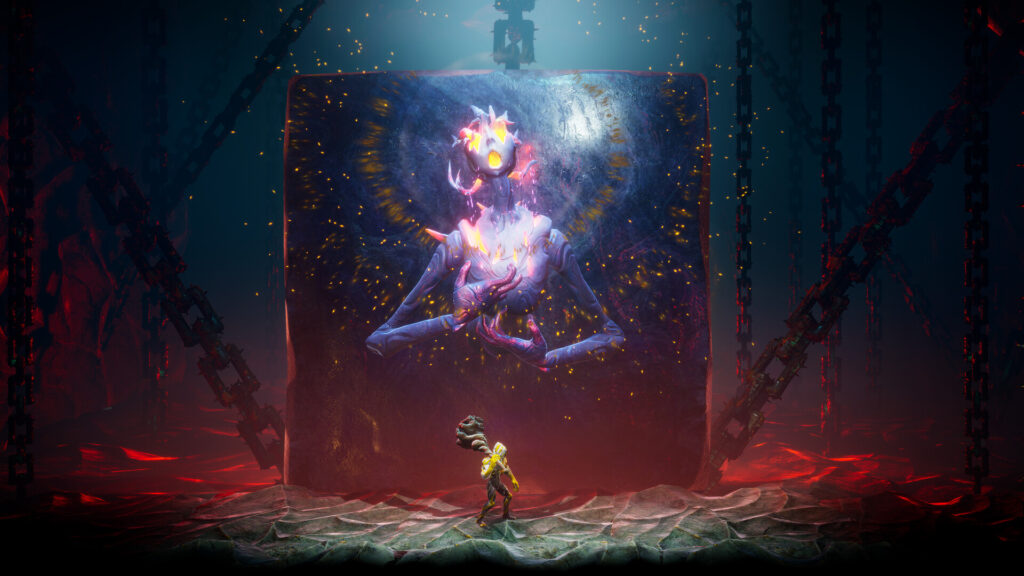
Its aesthetic remains deeply unsettling, blending organic textures with surreal architecture. What sets it apart is the confidence in its presentation, this is a game that fully commits to its vision.
Animations are smoother, enemy designs are more inventive, and the world feels more cohesive overall. It’s not conventionally beautiful, but it’s undeniably memorable. Few games manage to create something this grotesque and still make it feel like art rather than a gimmick.
The sound design plays a crucial role in reinforcing the game’s atmosphere.
Ambient noise, distant echoes, and subtle musical cues work together to build a constant sense of tension. The soundtrack is restrained, appearing when needed and fading into silence just as effectively. It’s a minimalist approach, but one that adds to the games immersion, even in its absence.
Oh, you thought I only had nice things to say? Unfortunately, for all its improvements, GRIME II isn’t flawless.
I really found the game’s pacing suffered in the latter half of the game. Particularly where exploration becomes more drawn out. Backtracking, while eased by fast travel, still has moments where it feels more like obligation than discovery.
Clarity, though improved, isn’t perfect either. Some mechanics and progression elements remain slightly opaque, especially for new players unfamiliar with the game’s design philosophy.
There are also minor technical inconsistencies and small performance hiccups that don’t derail the experience but are noticeable enough to mention. I have rattled through much more demanding games on my PS5 without a hitch, so I was surprised to see the frames dipping even below 30 from time to time. That being said though this was a pre-launch build and in a world of day one patches and hotfixes I fully expect many of you will not have to suffer the same fate.
So to wrap things up, GRIME II is a confident and carefully refined sequel. It strengthens the GRIME identity in almost every meaningful way.
Combat feels better. Exploration feels richer. Progression feels more deliberate. The world is carefully crafted and through it all, the game retains its most important quality… It feels fun to play from beginning to end. An accolade that is becoming a rare jewell in the metroidvania space.
It may not smooth out every rough edge, but what it delivers is still immensely valuable: a clear, uncompromised vision brought closer to its full potential.

GRIME II is scheduled for release on March 31, 2026, on Steam (PC), PlayStation 5, and Xbox Series X|S.
 VGT-Skyf